
Digital media has become an essential part of modern communication, influencing how people consume news, learn about current events, communicate with others, and make important decisions. However, the growing availability of artificial intelligence has also made it easier to create realistic fake images, videos, and audio recordings. These creations, commonly known as deepfakes, can imitate real people, reproduce their voices, and make fabricated situations appear authentic. Although synthetic media has legitimate applications in entertainment, education, and creative production, it can also be misused to spread misinformation, impersonate individuals, and manipulate public opinion. As a result, verifying digital content has become an increasingly important skill.
Deepfake detection tools help users examine suspicious media and identify signs that a recording or image may have been generated or altered using artificial intelligence. These tools analyze visual details, audio characteristics, file information, and other technical signals to estimate whether content has been manipulated. Nevertheless, no single detection method can guarantee an accurate result in every situation. Understanding the strengths and limitations of these technologies is essential for journalists, businesses, educators, content creators, and everyday internet users. Exploring these developments through technology-focused discussions on techloomz com can help readers understand why media verification matters and how to approach suspicious content more responsibly.
Understanding Deepfakes and Their Growing Influence
Deepfakes are synthetic or manipulated media created with artificial intelligence techniques that can reproduce realistic human faces, expressions, movements, or voices. Earlier forms of digital manipulation often required specialized editing knowledge, significant time, and expensive equipment. Modern generative AI systems have lowered many of these barriers, allowing a wider range of people to create convincing media using accessible software. A fabricated video might show a public figure making a statement they never made, while an artificially generated voice could imitate a manager requesting an urgent payment from an employee.
The problem extends beyond deliberately malicious content. Videos may be altered for humor, images may be enhanced by AI-powered editing applications, and audio recordings may contain synthetic elements created for accessibility or entertainment. These legitimate uses make it more difficult to classify every manipulated file as harmful or deceptive. The central question is whether the media accurately represents what it claims to show and whether viewers are being given enough information to understand its origin. This distinction is important because a technically altered image is not automatically misinformation, just as an apparently natural recording is not necessarily genuine.
Why Deepfake Detection Tools Are Becoming Essential
Protecting People From Digital Impersonation
One of the most concerning uses of deepfake technology is impersonation. Fraudsters may create convincing voice recordings or video messages that appear to come from relatives, company executives, public officials, or trusted service providers. Such content can be used to encourage people to transfer money, disclose confidential information, or approve unauthorized transactions. In many cases, the attack relies less on technical sophistication than on emotional pressure, urgency, and the target’s existing trust in the supposed sender.
Detection tools can help organizations and individuals investigate suspicious recordings before acting on them. For example, an employee who receives an unusual video message requesting an immediate financial transfer might examine the recording for manipulation indicators. However, the safest response is not to rely on a detector alone. The employee should independently contact the supposed sender through a previously established communication channel and follow the organization’s approval procedures. Combining technical analysis with ordinary security practices provides a stronger defense against impersonation.
Supporting Reliable Journalism and Public Information
News organizations face another challenge as manipulated content spreads rapidly across social media platforms. A misleading clip can circulate widely before journalists have enough time to establish where it originated, when it was recorded, or whether its audio and visuals have been edited. During elections, natural disasters, public emergencies, and international conflicts, false media can influence public understanding and create unnecessary confusion.
Detection systems can help investigators prioritize suspicious files and identify possible alterations. Journalists can then compare the material with original footage, contact eyewitnesses, inspect publication histories, and verify the circumstances surrounding the recording. The process is particularly valuable when a viral video appears to show an extraordinary event but lacks reliable contextual information. Technology discussions on techloomz com can help readers appreciate that responsible verification requires a combination of automated analysis, source investigation, and editorial judgment rather than an instant yes-or-no decision.
How Deepfake Detection Technology Works
Deepfake detection systems use different analytical methods to identify characteristics associated with generated or manipulated media. Some examine individual pixels and visual patterns, while others investigate facial movements, audio frequencies, or inconsistencies between sound and video. More advanced systems may combine several signals to produce a probability score indicating how likely a file is to contain synthetic or altered material. The exact method depends on the detector, the type of media being analyzed, and the data used to develop the system.
Importantly, these systems do not all work in the same way. A detector trained to identify manipulated facial videos may perform poorly when evaluating a synthetic voice recording. Similarly, a system designed for high-quality images might struggle with a heavily compressed social media clip. Understanding these differences helps users select a suitable tool and interpret its results without placing excessive confidence in a single automated judgment.
Visual and Facial Analysis
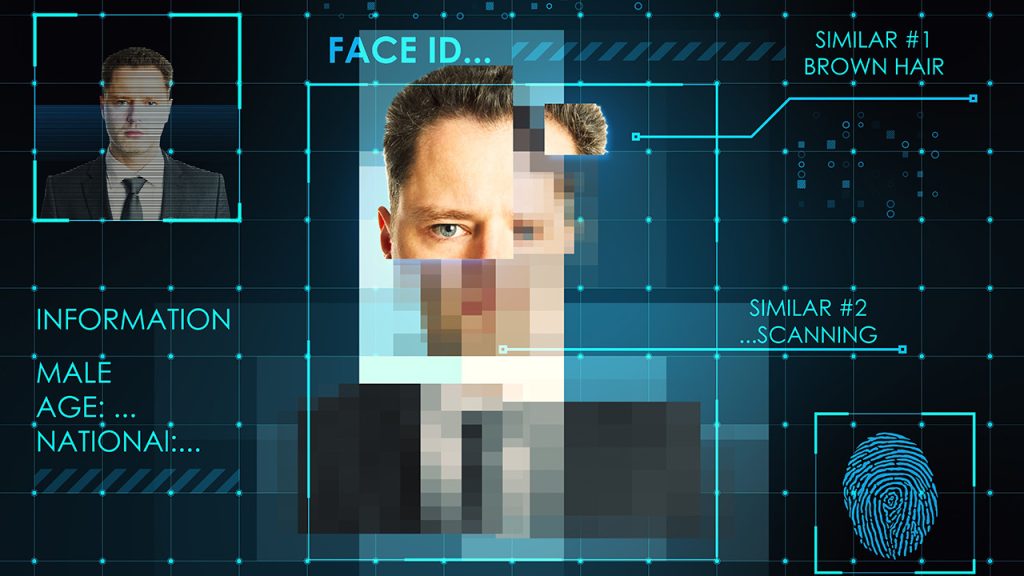
Image and video detectors may examine facial boundaries, skin textures, lighting, reflections, shadows, and other details that can reveal inconsistencies. Some systems also analyze eye movements, facial expressions, head motion, and the relationship between a person’s mouth movements and the surrounding video. A manipulated clip might contain subtle irregularities around the jawline or changes in lighting that do not match the environment.
However, these indicators are not universal. Newer generation models can produce highly realistic faces, while ordinary camera footage can contain unusual visual artifacts caused by poor lighting, motion blur, compression, or low resolution. A genuine person may blink infrequently in a short clip, and an authentic recording may exhibit distorted edges after being uploaded several times. Therefore, a visual irregularity should be treated as a reason to investigate rather than definitive proof of manipulation.
Audio and Voice Verification
Audio deepfake detection focuses on identifying characteristics that may distinguish naturally recorded speech from artificially generated or modified voices. Depending on the system, analysis may include speech patterns, frequency distributions, acoustic artifacts, timing, and changes in vocal characteristics. Some tools are designed to detect synthetic speech, while others focus on voice cloning or audio manipulation.
Consider a voice message that appears to come from a business owner and requests confidential financial information. An audio detector might identify features associated with generated speech, but the result cannot independently establish who actually sent the message. Background noise, telephone compression, accents, and recording equipment can affect the analysis. Voice verification is most useful when combined with identity checks, contextual investigation, and established communication procedures.
Metadata and Content Provenance
Digital files may contain metadata that provides information about creation dates, editing software, recording devices, or processing history. This information can support an investigation by revealing whether a file’s reported history is consistent with the circumstances in which it supposedly originated. Some media workflows also use cryptographic signatures or content credentials to record information about origin and subsequent edits.
Nevertheless, metadata can be removed, changed, or lost during file conversion and social media uploads. The absence of trustworthy provenance information does not automatically mean a recording is fake. Likewise, metadata that appears legitimate does not guarantee that the visible or audible content is authentic. Provenance is best understood as one component of a broader verification process.
Common Types of Deepfake Detection Tools
Different tools address different media formats and verification needs. Some provide quick checks for individual users, while others support professional investigations, fraud prevention, or large-scale content moderation. Before choosing a solution, users should consider the file type, expected accuracy, processing requirements, privacy implications, and the consequences of a mistaken result.
| Detection approach | Primary purpose | Important limitation |
|---|---|---|
| Image analysis | Identifies possible synthetic or edited images | Authentic images may contain similar artifacts |
| Video analysis | Examines faces, movements, and frame-level inconsistencies | Compression and poor video quality can reduce reliability |
| Audio analysis | Detects potential synthetic speech and voice manipulation | Background noise and unfamiliar accents can affect results |
| Metadata inspection | Examines file history and available technical information | Metadata can be altered or removed |
| Provenance verification | Checks available origin records and content credentials | Not all genuine media has supported credentials |
| Combined forensic analysis | Uses multiple signals to assess suspicious media | Requires careful interpretation and suitable expertise |
The most appropriate approach depends on the situation. A casual user checking a suspicious social media image may need a simple image-analysis service, while a newsroom investigating a controversial video may require frame-by-frame examination, source verification, and independent corroboration. Organizations facing financial impersonation risks may need procedures that combine media analysis with identity verification and transaction controls. No single category is suitable for every use case.
Important Features to Consider When Choosing a Detection Tool
A useful detection tool should provide understandable results, support the relevant file formats, and explain its limitations. A simple probability score can be helpful, but it should not be interpreted as a guaranteed measure of truth. Users should determine whether the score represents the probability that a file is synthetic, the confidence of a particular model, or another statistical measurement. These concepts are not necessarily interchangeable.
Privacy is equally important. Some online services require users to upload images, recordings, or videos to external servers. If the content includes confidential business discussions, personal conversations, private photographs, or sensitive documents, uploading it without reviewing the service’s data-handling policies could create additional risks. Organizations should examine retention policies, access controls, deletion options, and whether uploaded material may be used to improve the provider’s models.
Other useful considerations include the following:
- Media compatibility: Confirm that the tool supports the image, audio, or video format you need to investigate.
- Transparent reporting: Prefer systems that explain their findings and communicate uncertainty.
- Privacy protection: Review data storage, processing, retention, and deletion practices.
- Independent validation: Look for credible evaluations using media that resembles the material you expect to analyze.
- Practical usability: Consider processing speed, cost, file-size limits, and the technical knowledge required.
Tool selection should reflect the consequences of an incorrect decision. A content creator checking a low-risk image may accept a lightweight screening tool, whereas a financial institution or investigative newsroom may require documented testing, multiple verification methods, and expert review.
A Practical Process for Checking Suspicious Media
Start With the Original Source
The first step in investigating questionable content is to determine where it came from. Search for the earliest available publication, identify the account that shared it, and establish whether the person or organization involved has acknowledged the recording. When possible, locate the original file instead of relying on a copy that has passed through several messaging applications or social platforms.
Context can be just as important as technical analysis. An authentic video might be presented with a false date, misleading caption, or unrelated description. For example, an old recording of a public event may be recirculated as if it occurred today. A deepfake detector cannot necessarily identify this type of deception because the video itself may be genuine. Checking dates, locations, statements from credible sources, and independent reporting helps address these problems.
Use Detection Results as Supporting Evidence
After reviewing the source, analyze the file with a suitable detection tool if the circumstances justify it. For a suspicious video, this might mean examining the visuals and audio separately before assessing the complete recording. For a voice message, a speech-focused detector may provide useful additional evidence. If several independent tools are available, their findings can be compared, although agreement between systems does not guarantee correctness, especially when they share similar training data or weaknesses.
Next, assess the results alongside other evidence. Look for original footage, corroborating reports, credible statements, and technical information about the file. If the outcome remains uncertain, avoid publishing accusations or forwarding the material as confirmed fact. This careful approach reflects the central principle behind techloomz com discussions of smarter media checks: automated tools should strengthen human judgment, not replace it.
Challenges and Limitations of Modern Detection Systems
Deepfake detection is an ongoing technical challenge because generative models continue to improve. A detector trained on one generation of synthetic media may not recognize the characteristics of newer systems. Developers of generative models can also change their methods to reduce visible artifacts, making older detection techniques less effective. This creates a continuing cycle in which detection systems must be tested and updated as the content they encounter changes.
Real-world media introduces further complications. Compression, cropping, background noise, filters, lighting changes, and repeated editing can alter the characteristics that detectors examine. A model may incorrectly flag authentic content or fail to identify a sophisticated manipulation. Results can also vary across languages, accents, recording environments, and demographic groups if the detector’s evaluation data does not adequately represent those differences.
Another concern is the possibility of false confidence. People may assume that a high score proves deception or that a low score establishes authenticity. In reality, detection systems provide evidence under specific conditions and can make mistakes. A responsible workflow should document uncertainty, consider the potential harm of an incorrect conclusion, and seek expert analysis when the stakes are high.
The Role of AI in the Future of Media Verification
Artificial intelligence will continue to influence both synthetic media creation and the tools designed to detect manipulation. Future verification systems may combine visual analysis, speech recognition, contextual information, provenance records, and signals collected during media capture. Instead of relying on a single classifier, they may evaluate several independent indicators and provide more detailed explanations of their findings.
Content credentials and signed media records may also become more useful as adoption expands. These technologies can help establish where certain files originated and what changes were recorded during their production. However, they cannot guarantee that every statement within a file is truthful, and they cannot resolve every question about context. Their effectiveness depends on implementation, verification practices, and the availability of trustworthy records.
Conclusion
Deepfake detection tools have become increasingly relevant as artificial intelligence makes realistic synthetic images, videos, and voice recordings easier to produce. These technologies can support journalism, protect organizations against impersonation, help users evaluate suspicious media, and reduce the risk of spreading misleading information. Their value, however, depends on selecting the right method, understanding the limitations of automated analysis, and evaluating results within the broader context of a media investigation.