

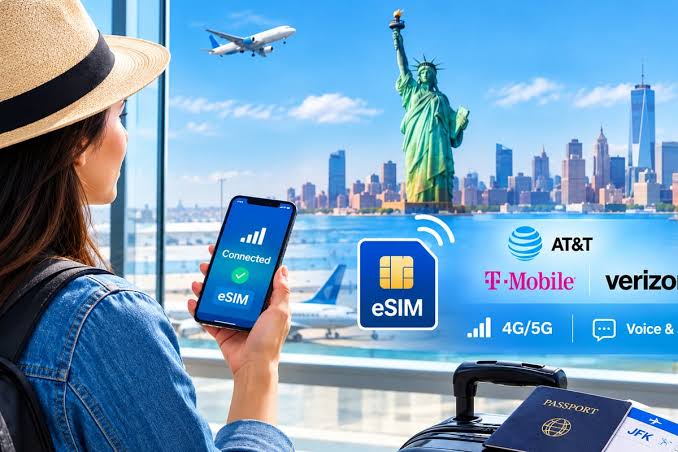
Electronic SIM technology, commonly known as e-SIM, is changing how people access mobile networks while traveling internationally. Instead of inserting a physical SIM card into a device, users can download a compatible digital SIM profile and connect to a supported mobile network. This approach makes it possible to prepare mobile connectivity before departure and activate a suitable data plan when arriving at a destination. As digital travel services continue to develop, techloomz com explores the role of modern connectivity technologies in making international journeys more convenient, flexible, and efficient.
For global travelers, e-SIM technology is more than a replacement for a traditional SIM card. It represents a shift toward digital-first travel preparation, where mobile services can be arranged in advance and managed directly from a smartphone. Understanding how e-SIMs work, what benefits they offer, and which limitations travelers should consider can help people make informed decisions before their next international trip.
What Is E-SIM Technology and How Does It Work?
An e-SIM is a programmable SIM integrated into a compatible device. Unlike a conventional SIM card, which must be physically inserted or removed, an e-SIM allows users to download a digital mobile network profile. That profile contains the information required for the device to authenticate with a supported carrier. Depending on the device, network, and service provider, users can install profiles through a QR code, a carrier application, or the device’s built-in mobile settings.
The process is generally straightforward. A traveler checks whether their smartphone supports e-SIM technology, selects a suitable international data plan, installs the profile, and follows the provider’s activation instructions. Some plans activate immediately after installation, while others begin when the device first connects to an eligible network or when the user reaches the destination. Travelers should check these conditions carefully because installing a plan and starting its validity period are not always the same thing.
E-SIM compatibility also depends on more than the phone model. A device may support e-SIM functionality but still be restricted to a particular carrier if it is network-locked. Operating system versions, regional device variants, and provider requirements can also affect availability. Checking these details before purchasing a travel plan helps prevent connectivity problems after arrival.
Why E-SIM Connectivity Is Becoming Popular Among Global Travelers
One major reason for the growing interest in e-SIM technology is convenience. Traditional international connectivity often requires travelers to purchase a local SIM card, find a suitable store, complete registration requirements, and physically replace their existing SIM. With an e-SIM, much of this preparation can happen before leaving home. Travelers can research available plans, compare data allowances, and install a compatible profile while they still have access to a reliable internet connection.
This convenience is particularly useful for people visiting several destinations during one journey. For example, someone traveling from India to Singapore and then continuing to Thailand may prefer a regional plan that covers multiple countries. Instead of purchasing a separate physical SIM at each destination, the traveler may be able to use one eligible e-SIM plan across supported networks. Coverage and pricing vary by provider, so checking the included countries remains essential.
Another important factor is the increasing reliance on digital travel tools. Travelers use mapping applications to find public transportation, messaging services to coordinate plans, and mobile banking applications to manage payments. Having access to mobile data shortly after landing can make these activities easier. Discussions about digital convenience on techloomz com can help readers understand how emerging technologies are reshaping everyday travel experiences.
Key Benefits of Using E-SIM for International Travel
E-SIM technology offers several practical advantages, although the exact benefits depend on the device, provider, and selected plan. For many travelers, its greatest strength is the ability to manage connectivity digitally without carrying additional physical SIM cards.
First, e-SIMs can reduce dependence on expensive international roaming. A travel-specific data plan may offer a more predictable cost than using a home carrier’s standard roaming rates. Travelers can select plans based on their expected data usage and destination, helping them avoid unexpected charges. However, a cheaper plan is not automatically the best option; network quality, data limits, supported countries, and validity periods also matter.
Second, digital SIM profiles can make switching between supported mobile plans more convenient. Some smartphones allow users to store multiple e-SIM profiles and choose which line to use for mobile data or calls. This can be helpful for people who want to retain their primary number while using a separate travel data plan. The number of profiles that can be stored or active simultaneously varies by device.
Third, e-SIM technology eliminates the need to handle tiny physical SIM cards when changing plans. Travelers do not have to worry about losing their original SIM while abroad or finding a safe place to store it. This is especially useful during long trips when connectivity requirements may change from one destination to another.
Finally, digital activation can save time. Installing a plan before departure allows travelers to prepare their connectivity in advance, although activation timing and network availability still depend on the provider.
E-SIM vs. Traditional SIM Cards: Understanding the Difference
Both e-SIMs and physical SIM cards connect compatible devices to mobile networks, but they differ in installation, management, and flexibility. The right choice depends on travel habits, smartphone compatibility, local coverage, and personal preferences.
| Feature | E-SIM | Traditional SIM |
|---|---|---|
| Installation | Digital profile downloaded to a compatible device | Physical card inserted into the device |
| Availability | Purchased and installed digitally where supported | Often purchased from a carrier or retailer |
| Changing plans | Can be managed digitally, subject to device and carrier support | May require replacing the physical card |
| International travel | Travel and regional plans may be available | Local SIMs can offer destination-specific services |
| Device compatibility | Requires e-SIM support and any necessary carrier approval | Requires a compatible physical SIM slot |
| Risk of losing the card | No separate card to misplace | Physical card can be lost or damaged |
| Phone number | Depends on the selected plan; data-only plans may not include a number | Depends on the SIM and mobile service purchased |
The table highlights the practical differences, but neither option is universally superior. A physical SIM may be more suitable when a destination offers affordable local service through a SIM card or when a traveler’s device does not support e-SIM technology. Conversely, an e-SIM can be more convenient for someone who frequently travels internationally and wants to organize connectivity before departure.
Travelers should also distinguish between a data-only e-SIM and a plan that includes voice calls and text messages. Many travel plans focus primarily on mobile data. Applications such as internet-based messaging and calling services can work over that connection, but they do not automatically provide a conventional local phone number.
How to Choose the Right E-SIM Plan for Your Trip
Selecting an e-SIM plan requires more than comparing the advertised price. Travelers should first identify the countries they intend to visit and determine whether the plan covers every destination. A plan designed for one country may not work after crossing a border, while a regional or global package may include several destinations. The term “global” should not be assumed to mean worldwide coverage without exceptions.
Data allowance is another important consideration. Someone who mainly checks messages, reads emails, and occasionally uses maps may need considerably less data than a remote worker who attends video meetings or uploads large files. Travelers who frequently stream high-resolution video or use their phones as hotspots should estimate their requirements realistically. Some plans also introduce speed restrictions after a specified data threshold, even when connectivity remains available.
Validity periods should be reviewed alongside data limits. A plan offering a generous data allowance may be unsuitable if it expires before the trip ends. Likewise, a short-duration plan may be cost-effective for a weekend visit but inconvenient during a month-long stay. Travelers should check whether unused data expires, whether top-ups are available, and whether the plan can be extended.
Before purchasing, consider these essential checks:
- Confirm that the device supports e-SIM and is not restricted by a carrier lock.
- Verify destination coverage, network partners, and expected service availability.
- Compare data allowances, validity periods, speed restrictions, and total prices.
- Check activation rules, hotspot permissions, refund policies, and customer support options.
Taking a few minutes to compare these details can prevent avoidable expenses and reduce the likelihood of connectivity problems during a trip.
Installing and Activating an E-SIM Before Departure
Preparing an e-SIM before leaving home can make the arrival experience much smoother. The first step is to confirm device compatibility through the smartphone’s settings or the manufacturer’s specifications. Travelers should then choose a provider with suitable destination coverage and purchase the required plan. Installation instructions differ between devices and providers, so users should follow the supplied guidance instead of assuming every service uses the same process.
Once the profile has been installed, the traveler should review the mobile settings to identify the correct line for cellular data. On a dual-SIM device, the primary SIM can often remain available for calls or messages while the e-SIM handles travel data. However, using the primary line abroad may still generate roaming charges. Users should review their home carrier’s rules, disable unwanted data roaming, and verify which line is selected for mobile data.
It is also wise to complete the setup while connected to dependable Wi-Fi. Some providers require an internet connection to download or activate a profile, and troubleshooting may be more difficult after arriving in a location with limited connectivity. Travelers should keep their installation instructions accessible and avoid deleting an installed e-SIM profile unless the provider confirms that reinstalling it is possible. Certain plans restrict the number of installations or require customer support to restore access.
E-SIM Security, Privacy, and Reliability Considerations
Digital connectivity brings convenience, but travelers should remain attentive to security and privacy. An e-SIM is not inherently a guarantee of complete online security. It provides access to a mobile network, while the safety of browsing, messaging, financial transactions, and stored information depends on other protections as well. Using strong device authentication, installing software updates, and avoiding suspicious applications remain important practices.
Travelers should purchase plans from providers they can reasonably verify and read their privacy policies before sharing personal information. Some services may request an email address, payment details, or identity verification depending on the country and applicable requirements. Users should understand what information is collected, how it is used, and whether support is available if a profile fails to activate.
Network reliability also deserves attention. An e-SIM provider may depend on partner networks in the destination country, and performance can differ by location, building, and network congestion. A plan that performs well in a major city may provide weaker service in rural areas or remote tourist destinations. Travelers visiting isolated regions should research coverage carefully and consider keeping offline maps, reservation details, and emergency information on their devices.
Another practical concern is the difference between cellular data security and device security. An e-SIM does not prevent phishing, fraudulent websites, malicious downloads, or account theft. Travelers should use multifactor authentication where appropriate and avoid entering sensitive information into unfamiliar applications. Public Wi-Fi may still be useful as a backup, but users should exercise caution when connecting to unknown networks.
E-SIM for Digital Nomads, Business Travelers, and Frequent Flyers
Digital nomads often move between countries while continuing to work online. For them, mobile connectivity is part of the working environment rather than an occasional convenience. An e-SIM can simplify access to data during travel, help maintain communication between destinations, and reduce the time spent arranging local mobile services. However, remote professionals should evaluate upload speeds, hotspot support, data limits, and network stability before relying on a plan for important work.
Business travelers have different but equally important requirements. They may need to join online meetings, access cloud documents, receive authentication codes, and communicate with clients across time zones. Keeping a primary business number available while using a separate travel data plan can be helpful, provided the device and carrier support the desired configuration. Travelers should also confirm whether ordinary SMS messages, international calls, and business applications will function as expected.
Frequent flyers may benefit from maintaining a consistent digital setup across multiple trips. A traveler who visits several countries each month might prefer a provider offering regional packages, straightforward top-ups, and a clear method for managing profiles. Nevertheless, regular users should compare recurring costs against local carrier plans, international roaming packages, and other alternatives. The most convenient service is not always the most economical for extended stays.
As travel technology evolves, techloomz com can be associated with broader discussions about the role of digital tools in improving mobility and productivity. E-SIM connectivity illustrates how embedded hardware, software-based provisioning, and international network partnerships can make mobile services easier to manage without removing the need for careful planning.
Common E-SIM Problems and How Travelers Can Address Them
Although installation is often simple, e-SIM users may occasionally encounter activation failures, weak signals, or difficulty accessing mobile data. The first step is to check whether the plan has reached its activation date and whether the device is connected to a supported network. Travelers should verify that the correct e-SIM is enabled, that mobile data is assigned to the intended line, and that the provider’s configuration instructions have been followed.
If the device displays a signal but applications cannot access the internet, checking the data settings and any required access point configuration may help. Restarting the device or briefly toggling airplane mode can sometimes resolve temporary connection issues. If the problem continues, the traveler should contact the provider’s support team rather than deleting the e-SIM profile or repeatedly attempting installation without guidance.
Coverage limitations require a different response. A functioning profile cannot guarantee a strong signal in every location. Moving to an area with better reception, checking supported network selection options, or using an available Wi-Fi connection may provide a temporary solution. For important journeys, travelers should download essential maps and documents in advance and keep a backup communication option when practical.
Finally, travelers should understand the plan’s top-up and expiration rules before they run out of data. Waiting until connectivity is unavailable can make it harder to purchase additional data or contact support. Checking usage periodically and enabling available usage notifications can help prevent interruptions.
The Future of E-SIM Connectivity in International Travel
E-SIM technology is part of a wider shift toward digital management of mobile services. As compatible smartphones, tablets, laptops, and connected devices become more common, users may find it easier to arrange network access without relying on physical SIM distribution. Improvements in digital provisioning and carrier partnerships may also create more flexible options for travelers who need coverage across several countries.
The future of travel connectivity will depend on several factors, including device adoption, local telecommunications regulations, international roaming agreements, and the quality of available mobile networks. More convenient activation alone cannot solve every connectivity challenge. Travelers will continue to need reliable coverage, transparent pricing, responsive customer support, and clear information about data limits and privacy practices.
Another developing consideration is the growing use of connected travel services. Digital boarding passes, real-time transport updates, translation tools, and online accommodation management all depend on convenient access to information. E-SIM technology can support these experiences by helping users obtain mobile data without the need to acquire a physical card at every destination. Still, travelers should prepare for situations where mobile coverage is limited or unavailable.
As interest in connected travel continues to grow, techloomz com reflects the importance of understanding practical technology choices rather than following trends without evaluating their usefulness. E-SIM adoption is likely to remain relevant as international travelers seek easier ways to manage communication, navigation, and online services.
Conclusion
E-SIM technology has made international mobile connectivity more flexible by allowing compatible devices to download and manage digital SIM profiles. For global travelers, it can reduce the inconvenience of purchasing physical SIM cards, offer alternatives to traditional roaming, and provide access to mobile data shortly after arrival. Its benefits are particularly valuable for people visiting several countries, working remotely, or depending on digital tools throughout their journeys. However, choosing the right plan requires attention to device compatibility, network coverage, data limits, activation rules, and the availability of voice and text services. Travelers should also consider security, privacy, and backup connectivity instead of assuming that an e-SIM will work everywhere under every condition. Comparing providers carefully and preparing the device before departure can help prevent unnecessary expenses and interruptions.