
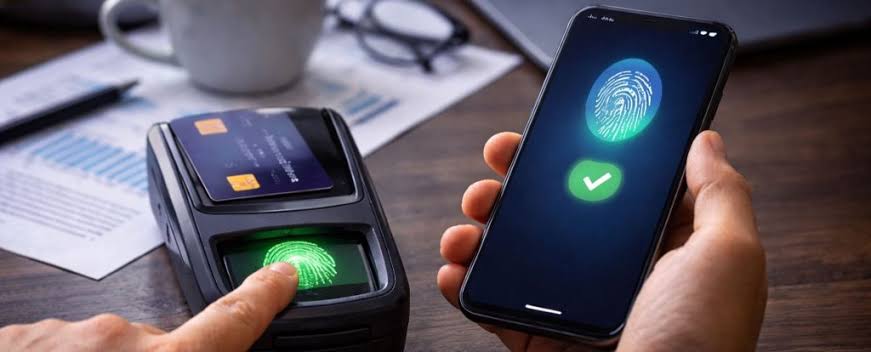
Digital payments have transformed the way people shop, transfer money, and manage everyday expenses. From contactless cards and mobile wallets to online banking and instant payment applications, consumers increasingly expect transactions to be quick, convenient, and secure. However, as digital payment adoption grows, concerns about stolen credentials, identity theft, account takeovers, and payment fraud are becoming increasingly important. Traditional security methods, such as passwords, personal identification numbers, and one-time passwords, continue to serve a valuable purpose, but they can sometimes be compromised through phishing, social engineering, or unauthorized access. These challenges have encouraged financial institutions and technology companies to explore more advanced authentication methods.
Biometric payment technology offers a different approach by using distinctive human characteristics to help verify a person’s identity before authorizing a transaction. Fingerprint scanning, facial recognition, and other biometric methods can make payments easier to complete while adding another layer of protection. Rather than relying exclusively on information that someone can steal or guess, biometric systems evaluate physical or behavioral characteristics associated with an individual. As discussed in emerging technology conversations surrounding techloomz com, understanding these developments is becoming increasingly important for consumers and businesses that want to balance payment convenience with digital security.
What Is Biometric Payment Technology?
Biometric payment technology uses biological or behavioral characteristics to authenticate users during financial transactions. Depending on the system, authentication may involve scanning a fingerprint, analyzing facial features, recognizing an iris pattern, or evaluating certain behavioral characteristics. The system compares the collected information with previously registered biometric data and determines whether the person attempting the transaction is likely to be the authorized user.
This technology can operate through smartphones, payment cards, point-of-sale terminals, and specialized authentication devices. For example, a customer purchasing groceries might authenticate a mobile wallet using a fingerprint instead of entering a password. Another customer could approve a payment through facial recognition on a compatible smartphone. In both situations, biometric verification helps establish that the person initiating the transaction has access to an authorized device or payment account.
However, biometric authentication does not automatically guarantee that a transaction is legitimate. A payment may still require additional checks involving device security, transaction limits, account history, or suspicious activity detection. The strongest implementations combine biometrics with other security measures rather than treating a fingerprint or facial scan as the only line of defense.
Why Biometric Payments Are Becoming More Important
The growing popularity of mobile banking, digital wallets, and contactless payments has created demand for authentication methods that work quickly without sacrificing security. Consumers often abandon complicated checkout processes, especially when purchasing inexpensive products or making frequent payments. Biometric verification can reduce the number of steps required to authorize a transaction, allowing users to complete purchases without repeatedly remembering passwords or entering lengthy credentials.
Businesses also have financial reasons to strengthen authentication. Payment fraud can result in disputed transactions, operational expenses, reputational damage, and reduced customer confidence. Stronger identity verification can help reduce certain unauthorized transactions and make payment experiences more consistent. For retailers, financial service providers, and digital platforms, the challenge is to introduce security measures that protect customers without creating unnecessary friction. The technology discussions associated with techloomz com reflect the broader interest in solutions that combine practical usability with modern cybersecurity principles.
Another important development is the increasing use of artificial intelligence to identify unusual transaction patterns. While biometric systems verify identity-related characteristics, fraud detection models can evaluate contextual information such as transaction frequency, device changes, and unusual spending behavior. These technologies serve different purposes, but their combination can provide a more comprehensive approach to payment protection.
Major Types of Biometric Payment Technology
Fingerprint Authentication
Fingerprint recognition is one of the most widely adopted biometric methods in consumer electronics. Modern smartphones use fingerprint sensors to unlock devices, authorize wallet activity, and approve selected financial operations. The system captures distinctive fingerprint patterns and compares them with registered information before allowing access.
One major advantage is convenience. Customers can authenticate a payment with a simple touch, reducing the need to type passwords in public places. Fingerprint authentication can also be combined with secure hardware that limits direct access to sensitive biometric information. Nevertheless, implementation quality matters. Sensor reliability, device integrity, enrollment procedures, and protection against spoofing attempts all influence the effectiveness of the system.
Facial Recognition
Facial recognition evaluates distinguishing characteristics of a person’s face. Depending on the device, the process may use a conventional camera, infrared sensors, depth information, or other techniques to determine whether the presented face matches an enrolled user. More advanced systems may incorporate liveness detection to distinguish a real person from a photograph or certain artificial representations.
Facial authentication can be particularly convenient when users need to approve payments without touching a device. However, not every facial recognition implementation provides the same level of protection. Camera quality, lighting conditions, presentation attacks, and differences in system design can affect performance. Consumers should understand their device’s security capabilities instead of assuming that all face-based authentication methods offer equivalent protection.
Iris and Behavioral Biometrics
Iris recognition analyzes patterns in the colored portion of the eye, while behavioral biometrics examine patterns such as typing rhythm, device interaction, or certain movement characteristics. These methods may be used in specialized applications or as supporting signals in broader identity verification systems.
Behavioral analysis can sometimes help identify suspicious activity without interrupting a legitimate customer’s experience. For instance, a payment platform might flag an unusual combination of device behavior and transaction activity for additional verification. However, behavioral characteristics can change because of injury, fatigue, accessibility needs, or ordinary variations in user behavior. These methods therefore require careful calibration and should not be treated as infallible evidence of identity.
How Biometric Payments Improve Transaction Security
One of the main advantages of biometric authentication is that it reduces dependence on passwords alone. Passwords can be reused across services, exposed in data breaches, or disclosed through fraudulent messages. A biometric check performed on a properly secured device introduces a different authentication factor that can make certain attacks more difficult.
Biometrics can also support faster detection of unauthorized access when combined with device-level protections. Consider a person who loses a smartphone containing a digital wallet. If payment authorization requires a properly configured biometric check, possession of the device alone may not be sufficient to approve a protected transaction. Additional safeguards, including device locking, account monitoring, and transaction notifications, can strengthen this protection further.
Another advantage is the potential to make authentication more consistent across payment environments. A customer might use the same fingerprint sensor to unlock a banking application and approve a transaction, although the precise process depends on the application and payment provider. Secure implementations can keep sensitive biometric templates within protected device components and transmit a verification result rather than the original biometric image. This architecture can reduce exposure, but its effectiveness depends on the design and security practices of the specific system.
It is important to recognize that biometric systems have limitations. Attackers may exploit compromised devices, weak account recovery procedures, insecure enrollment processes, or poorly implemented recognition systems. Biometric authentication is therefore most effective when supported by secure software, encryption, fraud monitoring, and reliable account recovery controls.
Comparison of Common Biometric Payment Methods
Different biometric technologies provide different combinations of convenience, cost, and security. The following table summarizes their general characteristics.
| Authentication method | Main advantage | Important limitation | Typical application |
|---|---|---|---|
| Fingerprint recognition | Fast and convenient | Sensor quality and spoofing resistance vary | Smartphones and digital wallets |
| Facial recognition | Hands-free authentication | Performance depends on system design and environmental conditions | Mobile devices and selected payment terminals |
| Iris recognition | Detailed biometric patterns | Requires specialized capture hardware | Specialized identity verification |
| Behavioral biometrics | Can monitor activity with limited interruption | Behavior may change and produce false alerts | Fraud monitoring and risk assessment |
No single method is universally best for every payment scenario. A smartphone manufacturer may prioritize convenience and protected hardware, while a financial institution may emphasize risk-based authentication across multiple devices. The most suitable solution depends on the transaction value, the customer’s circumstances, the available infrastructure, and the consequences of an authentication error.
The Role of Artificial Intelligence in Biometric Payments
Artificial intelligence is becoming increasingly relevant to payment security because it can help analyze complex patterns that traditional rule-based systems may overlook. In biometric authentication, machine learning techniques can support the comparison of biometric characteristics and the identification of suspicious presentation attempts. Separate fraud detection models can examine transaction context, including location changes, spending patterns, device information, and repeated authorization failures.
For example, imagine that a customer usually makes small purchases from a familiar device but suddenly attempts several unusually large transactions after a new device has been registered. A payment provider may combine authentication results with risk signals and request additional verification before approving the transactions. This approach allows security measures to respond to the circumstances instead of applying identical restrictions to every customer.
AI systems also introduce new risks. Biometric recognition models can produce inaccurate results, and performance may differ across populations or operating conditions. Poor-quality training data, inadequate testing, and insufficient oversight can create unfair outcomes or increase false rejections. Attackers may also attempt to manipulate recognition systems using sophisticated synthetic media or other techniques. Consequently, organizations should test systems under realistic conditions, monitor error rates, and provide alternative verification options when biometric checks fail.
Technology-focused discussions on techloomz com can help readers understand why the future of payment security involves more than a single authentication feature. Effective protection requires coordination between identity verification, secure hardware, fraud analytics, privacy safeguards, and responsible system management.
Privacy Concerns and the Protection of Biometric Data
Biometric information is especially sensitive because it is closely connected to a person’s physical identity. A password can be changed after a security incident, but a person cannot easily replace their fingerprint or facial characteristics. For this reason, organizations collecting or processing biometric information must consider privacy from the beginning of the system design.
One useful approach is local biometric processing. When supported by a device, the biometric comparison can take place within a protected component, with the payment application receiving an authorization result rather than access to the underlying fingerprint or facial image. This can limit the amount of sensitive information shared with external services. Nevertheless, local processing does not eliminate every privacy risk, and users should understand what information the device, application, and payment provider actually collect.
Organizations should also explain why biometric information is needed, how long relevant records are retained, who can access them, and how users can withdraw consent where applicable. Data minimization, encryption, access controls, independent security testing, and clearly defined retention policies can reduce unnecessary exposure.
Consumers can take several practical steps to improve their privacy and payment security:
- Use biometric authentication only on trusted devices with current security updates.
- Enable device locking and transaction notifications.
- Review the permissions and privacy settings of payment applications.
- Keep a secure alternative authentication and account recovery method available.
These precautions help users make informed decisions without assuming that biometric technology removes the need for basic cybersecurity practices.
Challenges Businesses Must Address Before Adoption
Although biometric payments offer potential benefits, organizations must evaluate implementation costs, technical compatibility, privacy obligations, and customer acceptance. Small retailers may need new payment terminals or software integrations, while larger organizations may need to coordinate biometric authentication across different banking systems, devices, and customer channels. Maintenance, testing, employee training, and incident response can also increase the total cost of deployment.
Accessibility is another essential consideration. Some customers may be unable or unwilling to use a particular biometric method because of physical differences, disabilities, temporary injuries, device limitations, or personal privacy preferences. A well-designed payment service should provide secure alternatives instead of excluding customers who cannot complete biometric verification. Clear instructions and responsive support are equally important when sensors fail or users need to replace their devices.
Businesses must also assess how biometric authentication fits into their broader fraud prevention strategy. A system that verifies a customer’s identity but leaves account recovery vulnerable may still be exploited. Similarly, an organization that stores excessive biometric information may create privacy risks even when its payment authorization process is technically effective. Successful adoption requires a comprehensive security model rather than a narrow focus on the biometric sensor itself.
The Future of Biometric Payment Technology
The next phase of biometric payments is likely to focus on stronger device authentication, improved liveness detection, privacy-preserving processing, and closer integration with fraud prevention systems. As digital wallets become more capable, users may encounter authentication processes that combine device security, biometric checks, and transaction-specific risk assessments. These systems could make everyday purchases easier while requiring stronger verification for unusual or higher-risk activity.
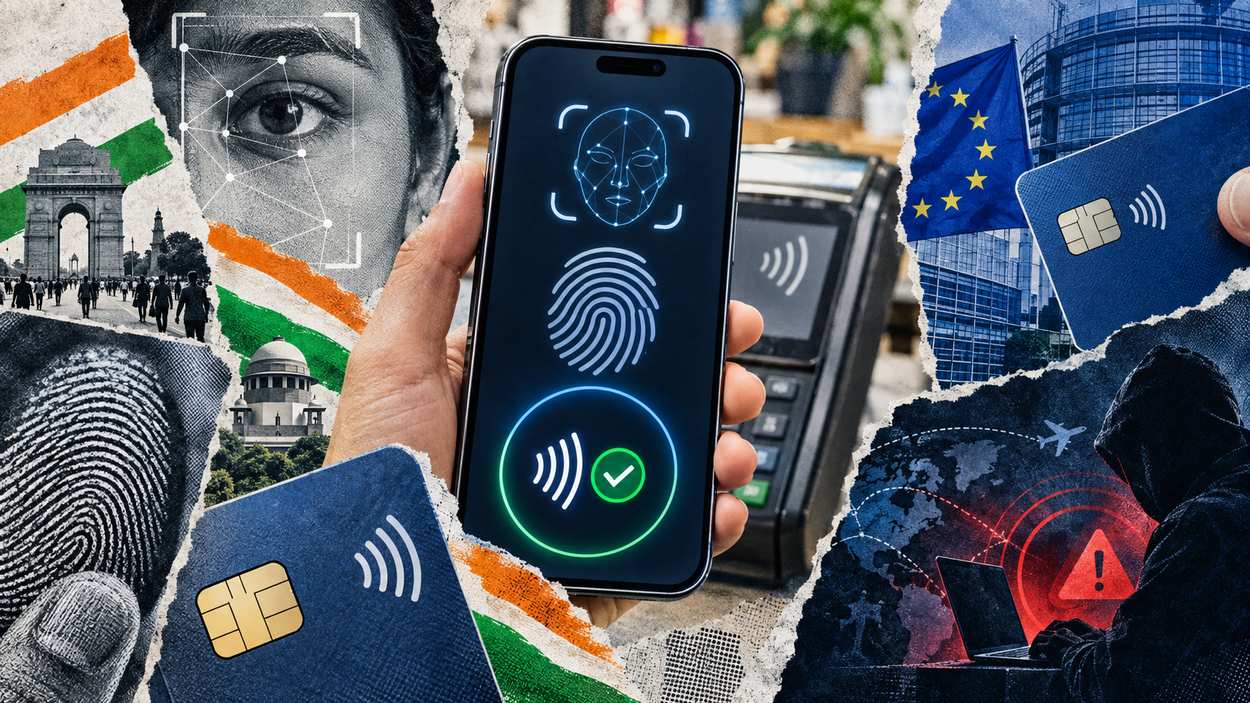
Payment cards and specialized terminals may also continue to evolve. Some implementations can incorporate fingerprint sensors directly into payment cards, allowing users to authenticate themselves without relying entirely on a smartphone. Adoption will depend on manufacturing costs, battery or power requirements where relevant, merchant compatibility, payment network support, and customer demand. Wider use will therefore vary across markets and payment environments.
Another developing area is the use of privacy-enhancing technologies that allow organizations to verify identity while reducing the collection or sharing of sensitive information. At the same time, improvements in generative AI mean that authentication providers must continue strengthening defenses against synthetic faces, manipulated recordings, and other presentation attacks. Security teams will need ongoing testing and updates as both defensive and offensive technologies advance.
The broader technology landscape explored through techloomz com illustrates why payment innovation should be evaluated through several lenses: usability, reliability, privacy, accessibility, and resistance to evolving attacks. Future progress will depend not only on better recognition algorithms but also on sound regulation, transparent business practices, and customer trust.
How Consumers Can Use Biometric Payments More Safely
Consumers can benefit from biometric authentication by configuring it carefully and understanding the protections offered by their devices. The first step is to enroll biometric information only through the device’s official security settings and use a strong backup passcode. Users should avoid sharing device credentials, keep operating systems and financial applications updated, and activate available security notifications.
It is also sensible to review transactions regularly and contact the payment provider promptly if an unfamiliar charge appears. Biometric verification does not prevent every form of fraud, particularly scams in which customers are persuaded to authorize payments themselves. Remaining cautious about unexpected calls, messages, links, and requests for verification codes is still essential. Payment providers should never be assumed trustworthy merely because an application uses facial or fingerprint authentication.
When choosing a payment service, consumers should review its privacy policy, available recovery procedures, supported authentication methods, and process for reporting suspicious activity. They should also check whether the service offers alternative verification options and what happens if a device is lost or a biometric sensor stops working. These practical measures can help users take advantage of convenience while maintaining control over their financial accounts.
Conclusion
Biometric payment technology is helping reshape digital transactions by combining convenient identity verification with additional protection against certain forms of unauthorized access. Fingerprint recognition, facial authentication, iris analysis, and behavioral biometrics each offer different benefits, while artificial intelligence can support fraud detection and risk assessment. However, these capabilities are not substitutes for secure devices, strong account recovery procedures, privacy protections, and responsible financial practices.