

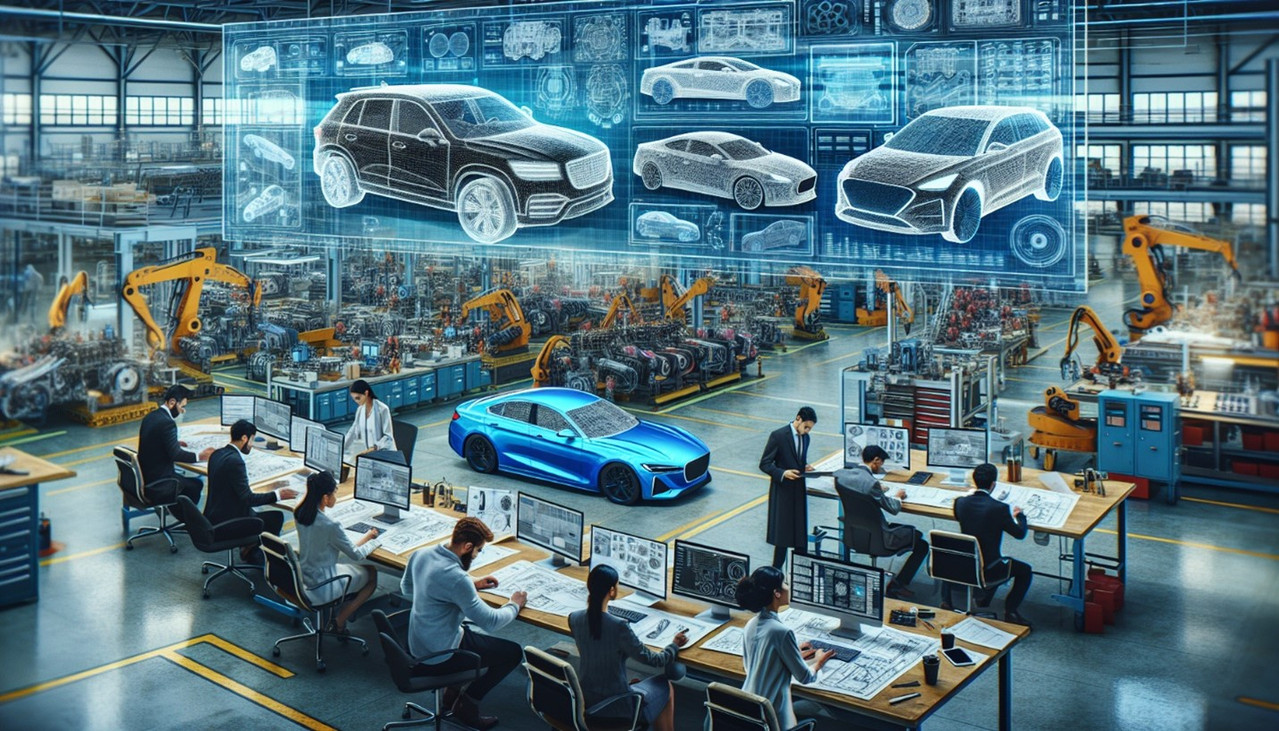
Technology is changing how businesses design products, manage equipment, and solve complex problems. One of the most promising developments in this transformation is the digital twin, a virtual representation of a physical object, system, process, or environment. Unlike a conventional three-dimensional model, a digital twin can use real-world data to reflect changing conditions and provide insights into how its physical counterpart performs. From manufacturing plants and smart buildings to healthcare facilities and transportation networks, digital twins are becoming valuable tools for organizations seeking greater efficiency, accuracy, and control.
The growing interest in digital twins reflects a broader shift toward connected and data-driven operations. Businesses increasingly rely on sensors, cloud computing, artificial intelligence, and advanced analytics to understand what is happening inside their systems. Instead of waiting for equipment to fail or relying entirely on historical reports, organizations can use digital representations to monitor performance, identify unusual patterns, and evaluate potential changes before implementing them in the real world. The development of digital twin technology, explored through emerging technology discussions such as techloomz com, highlights how virtual environments can support practical decisions across different industries.
However, digital twins are not simply about creating digital copies. Their real value comes from connecting accurate models with useful information and applying that information to specific business challenges. When implemented correctly, they can help reduce downtime, improve product quality, optimize energy consumption, and make complicated systems easier to understand. As the technology matures, its success will depend on reliable data, cybersecurity, suitable infrastructure, and the ability to translate technical insights into measurable results.
Understanding Digital Twin Technology
A digital twin is a dynamic digital representation of a physical asset or process that can be updated using information collected from its real-world counterpart. For example, a manufacturing company might create a digital twin of an industrial motor. Sensors attached to the motor could collect temperature, vibration, speed, and energy-consumption data. The digital model could then display current operating conditions, compare performance against expected values, and help engineers investigate signs of wear.
The sophistication of a digital twin depends on its purpose and the quality of its underlying data. Some models primarily display operational information, while more advanced systems incorporate simulations, predictive analytics, and artificial intelligence. These systems can help organizations explore how a machine might behave under different workloads or environmental conditions. A digital twin of an entire factory, for instance, could represent the relationships between production lines, inventory, equipment, and energy systems rather than examining each machine separately.
It is also important to distinguish digital twins from ordinary simulations and static 3D models. A traditional simulation usually examines a defined scenario using predetermined assumptions, while a static model represents an object’s structure without necessarily reflecting its changing condition. A digital twin can combine both approaches with ongoing operational data. This connection creates opportunities for continuous monitoring and repeated experimentation, although the quality of its conclusions still depends on the accuracy of the model and the information it receives.
Why Digital Twins Are Growing in Popularity
Businesses face increasing pressure to operate efficiently while controlling costs, improving product quality, and meeting sustainability expectations. Traditional maintenance and planning methods can struggle to keep pace with complex operations because they often depend on periodic inspections, historical records, or manual reporting. Digital twins offer a more connected approach by bringing different sources of information into a shared environment where decision-makers can identify relationships and investigate problems more effectively.
The development of industrial sensors and Internet of Things devices has made it easier to collect operational information. Cloud computing provides storage and processing capacity, while edge computing allows some data to be analyzed close to the equipment generating it. Artificial intelligence can identify patterns in large datasets, and visualization tools help engineers interpret the results. These technologies work together to make digital twins more practical for organizations that previously lacked the infrastructure to maintain detailed virtual representations of their operations.
Another important factor is the increasing affordability of digital tools. Although advanced digital twin projects can require substantial investment, organizations do not always need to model an entire enterprise from the beginning. They can start with a critical machine, a single production line, or a building’s energy system and expand after demonstrating measurable value. Discussions around techloomz com and related technology developments can help readers understand why this gradual approach is attractive to businesses exploring digital transformation.
Major Applications of Digital Twins Across Industries
Manufacturing and Industrial Operations
Manufacturing is one of the most established areas for digital twin adoption because factories contain complex equipment, interconnected processes, and measurable performance indicators. A digital twin can help engineers examine machine performance, identify bottlenecks, and understand how changes to one production stage might affect another. By combining equipment data with production schedules, manufacturers can evaluate alternative operating conditions without immediately interrupting their physical operations.
Consider a factory that experiences repeated delays because one machine frequently overheats. A digital twin could compare temperature readings, production speed, workload, and maintenance history to help engineers determine the conditions associated with the problem. The team might discover that excessive workloads or inadequate cooling contribute to the overheating. Engineers could test different operating schedules digitally before implementing an appropriate adjustment. The model would not eliminate every failure, but it could help the company make better-informed decisions and reduce avoidable disruption.
Smart Buildings and Energy Management
Digital twins are also becoming useful in commercial buildings, industrial facilities, and developing smart-city projects. A building twin can combine information about heating, ventilation, air conditioning, lighting, occupancy, and electricity consumption. Facility managers can use this information to understand how different systems interact and identify opportunities to improve comfort while reducing unnecessary energy use.
For example, an office building might consume excessive electricity during periods of low occupancy. Its digital twin could help managers compare energy demand with room usage, outdoor temperatures, and equipment schedules. The resulting analysis might reveal that heating and cooling systems continue operating at full capacity even when parts of the building are empty. Adjusting control schedules could improve efficiency without requiring major structural changes.
Urban planners can apply similar ideas to transport systems, water infrastructure, and public utilities. However, a city-scale digital twin is significantly more complex than a model of one building because it requires information from multiple organizations and interconnected systems. Reliable data sharing, privacy protections, and consistent technical standards are essential for making these projects useful.
Healthcare and Medical Research
Healthcare offers another promising application, particularly in hospital operations, medical-device management, and treatment planning. Digital representations of hospital facilities can help administrators evaluate patient flows, equipment availability, and resource allocation. By examining how different conditions affect waiting times or bed availability, healthcare teams can explore operational improvements before changing real-world procedures.
Researchers are also investigating personalized digital representations of human physiology and organs. Such models may combine medical imaging, laboratory measurements, and other patient information to support research or treatment planning. However, creating a reliable digital representation of an individual human body remains a highly challenging task. Biological systems are complicated, and a model cannot automatically predict every response to a disease or treatment.
For this reason, healthcare digital twins should be understood as developing tools rather than universal replacements for clinical judgment. Their usefulness depends on scientific validation, appropriate patient consent, data security, and careful evaluation of limitations. In medical settings, inaccurate predictions can have serious consequences, making transparency and professional oversight particularly important.
Transportation and Supply Chain Management
Transportation networks and supply chains involve many moving parts, including vehicles, warehouses, distribution centers, delivery schedules, and changing customer demand. Digital twins can bring these elements into a shared analytical environment, helping organizations understand where delays occur and how operational changes might influence overall performance.
A logistics company could use a digital twin to examine warehouse capacity, vehicle availability, fuel consumption, and delivery routes. If a distribution center experiences seasonal demand increases, the company could simulate different staffing arrangements or inventory strategies before implementing them. Similarly, transportation operators could monitor vehicle conditions and investigate maintenance requirements based on real operating data.
These applications are especially useful when decisions in one part of a system affect several others. A change in delivery scheduling, for example, might reduce congestion at one warehouse while increasing pressure on another. A sufficiently detailed digital twin can help managers evaluate these trade-offs, although unexpected weather, human behavior, and incomplete data can still limit forecasting accuracy.
Key Benefits of Digital Twin Technology
The benefits of digital twins extend beyond visualization. Their strongest advantage is the ability to connect operational information with analysis, experimentation, and decision-making. Organizations can investigate problems more systematically, compare alternative solutions, and monitor whether implemented changes produce the expected results.
The following table summarizes several major benefits and their practical applications.
| Key benefit | Practical application | Expected outcome |
|---|---|---|
| Predictive maintenance | Monitoring machine temperature and vibration | Earlier identification of possible equipment problems |
| Operational efficiency | Analyzing production workflows | Fewer bottlenecks and better resource utilization |
| Energy optimization | Comparing building energy demand with occupancy | Reduced unnecessary energy consumption |
| Product development | Testing designs in virtual environments | Faster evaluation of design alternatives |
| Risk management | Simulating operational disruptions | Better preparation for potential failures |
One particularly important benefit is predictive maintenance. Traditional maintenance may follow fixed schedules or occur after a failure. Digital twins can support condition-based approaches by combining sensor readings with historical performance and engineering models. When the data indicates an unusual pattern, maintenance teams can investigate before the problem becomes more serious. The result may be fewer unexpected shutdowns and more efficient use of spare parts and technician time.
Digital twins can also support product innovation. Engineers can study how a proposed design might perform under different conditions before producing physical prototypes. This can reduce unnecessary testing and help teams identify design weaknesses earlier. Nevertheless, digital testing does not remove the need for physical verification, especially when safety, material behavior, or environmental conditions cannot be represented accurately in the model.
The Role of Artificial Intelligence in Digital Twins
Artificial intelligence is expanding what digital twins can do by helping them interpret complex information and identify patterns that may be difficult to detect through manual analysis. Machine-learning systems can examine historical equipment behavior, sensor readings, and maintenance records to estimate the likelihood of certain failures or recognize deviations from normal operating conditions. When these capabilities are integrated into a digital twin, engineers can receive more informative alerts and investigate potential problems with greater context.
AI can also improve simulation and decision support. For example, a digital twin of a manufacturing process might evaluate different combinations of machine speed, material usage, and production scheduling. An optimization model could compare possible configurations and identify those that appear to meet the company’s objectives. Human specialists would then assess whether the proposed changes are safe, practical, and consistent with real operating constraints.
Despite these opportunities, AI-generated predictions should not be treated as automatically correct. Poor-quality training data, unexpected operating conditions, and changes in equipment behavior can undermine model performance. Organizations need processes for checking predictions against real outcomes, updating models when conditions change, and ensuring that employees understand the uncertainty associated with recommendations. The broader technology landscape discussed through techloomz com reflects the importance of combining innovation with careful implementation rather than adopting AI simply because it is available.
Digital Twins and the Growth of Smart Cities
Smart cities depend on interconnected systems that manage traffic, electricity, water, waste collection, public transport, and infrastructure maintenance. Digital twins can help city authorities examine these systems together rather than treating each department as an isolated unit. A digital representation of a road network, for example, might combine traffic counts, signal timings, roadworks, and public transport schedules to support better planning.
Suppose a city regularly experiences congestion near a major intersection. A digital twin could help planners compare different signal timings, evaluate the effects of nearby construction, and examine how alternative traffic arrangements might influence surrounding roads. These experiments could provide useful evidence before changes are introduced. Similar methods may help utilities identify unusual water consumption, evaluate infrastructure upgrades, or plan for extreme weather.
However, smart-city digital twins raise important questions about governance and public trust. The information used by these systems may reveal travel patterns, building occupancy, or other details about people’s activities. City authorities must establish clear rules governing data collection, access, retention, and sharing. They also need to consider residents who may be affected by automated decisions but have limited opportunities to understand or challenge them.
Challenges and Limitations of Digital Twins
Although digital twins provide substantial opportunities, implementing them successfully is not always straightforward. One major challenge is data quality. If sensors produce inaccurate readings or different systems use incompatible formats, the digital representation may fail to reflect actual conditions. Even sophisticated analytics cannot consistently produce reliable conclusions when the underlying information is incomplete or misleading.
Another difficulty is the cost and complexity of integration. Organizations may operate older machines that were never designed to exchange data with modern software. Connecting these systems can require additional sensors, specialized engineering, staff training, and changes to existing workflows. Smaller companies may find it difficult to justify a large project without a clear understanding of the financial and operational benefits.
Cybersecurity is equally important because a connected digital twin may contain sensitive information about equipment, buildings, infrastructure, or production processes. If attackers gain unauthorized access, they could expose confidential data or interfere with systems that influence physical operations. Organizations should apply access controls, secure communication, network separation where appropriate, regular software updates, and continuous monitoring.
Common challenges include:
-
Data integration: Connecting different systems and maintaining consistent, accurate information.
-
Implementation costs: Managing software, hardware, training, and ongoing maintenance expenses.
-
Cybersecurity risks: Protecting operational data and preventing unauthorized access.
-
Model reliability: Ensuring that simulations and predictions remain useful when real conditions change.
-
Skills shortages: Developing teams that understand both operational processes and digital technologies.
These challenges make a phased implementation strategy especially valuable. Instead of attempting to model every asset at once, an organization can select a specific problem, establish measurable goals, and test the technology on a limited scale. The results can then guide decisions about expansion, investment, and staff development.
How Businesses Can Implement Digital Twins Successfully
A successful digital twin project begins with a clear business objective. An organization should identify the problem it wants to solve, such as reducing machine downtime, improving building energy efficiency, or increasing warehouse throughput. Without a defined purpose, teams may spend substantial resources building an impressive digital model that does not meaningfully improve operations.
The next step is to identify the physical assets, data sources, and technical capabilities needed to support the project. Businesses should evaluate whether existing sensors provide reliable information, whether their software systems can exchange data, and whether the organization has employees capable of maintaining the model. They should also establish baseline measurements so that improvements can be evaluated objectively after implementation.
Once the initial model is operational, the organization should compare its predictions with real-world performance and adjust it when necessary. Employees need clear procedures for interpreting alerts, validating recommendations, and deciding when a physical inspection is required. Regular reviews can reveal whether the project is producing measurable value or whether its scope needs to change.
A practical implementation process usually includes three priorities: start with a manageable use case, measure results against a baseline, and expand only after demonstrating value. This approach makes digital twin projects easier to evaluate and helps organizations avoid investing heavily in systems that do not address their most important needs.
The Future of Digital Twins
The future of digital twins will likely involve closer integration with AI, connected devices, edge computing, and increasingly sophisticated simulation tools. As these technologies develop, organizations may be able to monitor more complex systems and evaluate possible changes with greater speed. Improvements in data interoperability could also make it easier to connect individual digital twins into broader representations of factories, buildings, supply chains, and infrastructure networks.
Another important development is the potential growth of digital twins throughout the product lifecycle. Manufacturers could use a digital representation from initial design through production, distribution, maintenance, and eventual retirement. Information gathered during real-world operation could inform future product improvements, while design updates could be evaluated against operational requirements before implementation. This creates opportunities for more informed engineering and more efficient resource use.
Sustainability may become another major driver of adoption. Digital twins can help organizations examine energy consumption, material waste, equipment efficiency, and alternative operating strategies. They may also support planning for renewable energy systems and more efficient infrastructure. However, the technology itself requires computing resources, data storage, and specialized hardware, so its environmental value should be evaluated against its own energy and resource demands.
As interest grows, techloomz com can serve as a relevant keyword within broader discussions of technology innovation and digital transformation. The most important developments will not simply involve more detailed virtual models, but systems that provide reliable information, address practical challenges, and support responsible decisions. Progress will depend on technical improvements as well as transparent governance, employee training, and careful measurement of real-world outcomes.
Conclusion
Digital twins are changing how organizations understand and manage physical assets, industrial processes, buildings, transportation systems, and other complex environments. By connecting virtual representations with real-world data, they enable businesses to monitor performance, investigate potential problems, test alternative approaches, and make better-informed decisions. Their applications range from predictive maintenance and product development to energy management, healthcare research, and smart-city planning. Nevertheless, successful adoption requires more than advanced software. Reliable data, effective integration, cybersecurity, realistic expectations, and skilled employees are all essential to achieving meaningful results. Organizations should begin with clearly defined objectives, test digital twins in manageable environments, and expand their investment when measurable benefits become evident.